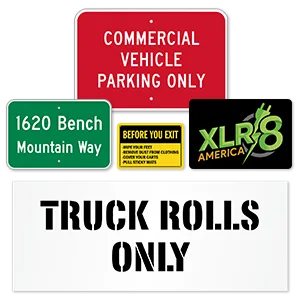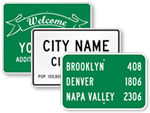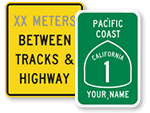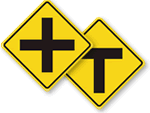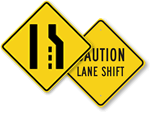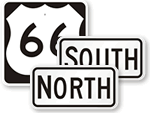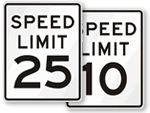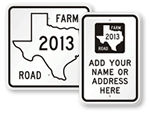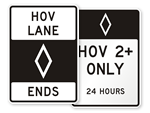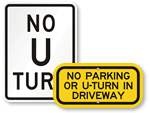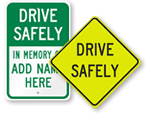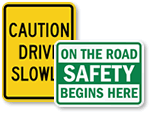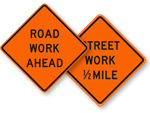
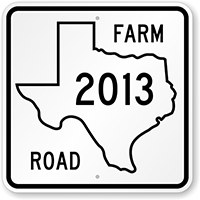
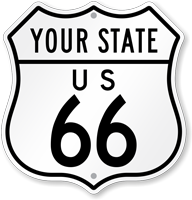
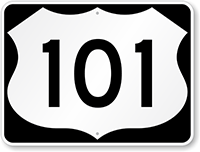

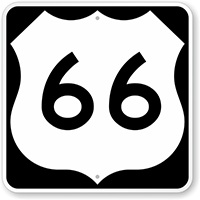

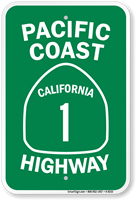
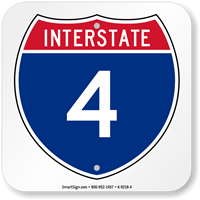
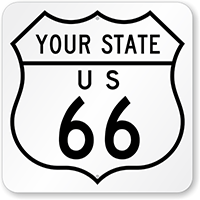
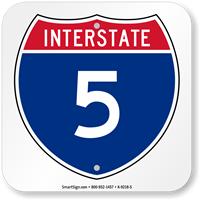
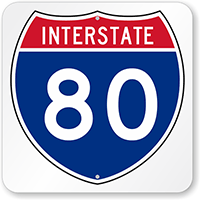
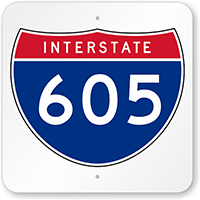
Interstate signs on this page are novelty signs designed to add an element of nostalgia to a personal or professional space, and they make popular souvenirs for friends and family who want a keepsake from a favorite route. Interstate signs are modeled on the same shield and route marker designs used on real highways across the country.
Interstate signs and the broader interstate highway sign system use color as a quick visual cue, a standard set by the MUTCD. Green interstate signs handle route and distance guidance, blue interstate signs point to services like gas, food, and lodging, brown interstate signs mark recreational and cultural destinations, and white interstate signs communicate regulations like speed limits. Green became the standard for directional interstate signs after AASHO field testing in the 1950s, when a majority of state highway officials preferred a green background for visibility and driver recognition over other candidate colors.
Interstate signs display numbers that follow a pattern set by AASHTO, with odd numbers assigned to north-south routes and even numbers assigned to east-west routes. North-south interstate signs increase in number from west to east, east-west interstate signs increase from south to north, and three-digit interstate signs mark auxiliary routes branching off a primary two-digit interstate.
Interstate signs are made primarily of aluminum, available in heavy-duty, reflective, and standard aluminum grades. On real interstate highway signage, reflective sheeting is generally categorized into engineer grade, high-intensity grade, and diamond grade, with diamond grade offering the strongest reflectivity for high-speed, high-traffic corridors.
The interstate shield design used on interstate signs was approved on August 14, 1957, after the American Association of State Highway Officials asked member states to submit ideas for a national interstate marker. The winning design combined a Texas submission for the shield shape with a Missouri submission that added the word "INTERSTATE" across the top, and the red, white, and blue color scheme on interstate signs was chosen to echo the American flag.
The Manual on Uniform Traffic Control Devices, published by the Federal Highway Administration, sets the federal standards that official interstate signs must follow for shape, color, size, and lettering. States are required to adopt the MUTCD or a state-specific manual in substantial conformance with it, which is why real interstate signs look consistent no matter which state a driver is traveling through.
These interstate signs are novelty signs rather than official DOT-installed roadway signs, though they're created using the same materials used for official interstate signs, giving them a comparable look and durability for display purposes.
We are the industry leader in novelty interstate signs, offering an easy way to add an element of nostalgia to a personal or professional space with signs modeled after the real interstate shield and route marker designs governed by the MUTCD.
Call our sales team at (800) 952-1457 and get your quote in minutes!
Mon - Fri 8:00am to 7:00pm EST
Best price guarantee. Fast, free shipping.