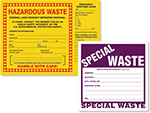
Per EPA regulations (40 CFR Part 262), all hazardous waste containers must be clearly marked with the words "HAZARDOUS WASTE." The label must also include the accumulation start date (the day waste was first added), the EPA waste number, and the generator's name and address. This information is critical for tracking, safety, and disposal.
This clear labeling is a cornerstone of your hazardous waste management program. A 90-day accumulation area sign reinforces the timeline, while a "Drum Contains Hazardous Waste" danger sign provides a clear, compliant warning directly on the container.
Satellite accumulation areas—where waste is first collected at or near the point of generation—must be marked with labels that clearly state "HAZARDOUS WASTE" or other words that identify the contents. According to the EPA, these containers must be under the control of the operator and properly closed.
Using hazardous waste signs specifically designed for these locations is a compliance best practice. A "Satellite Waste Accumulation Area" caution sign clearly designates the area, ensuring other materials are not improperly stored there and that containers are monitored correctly. A sign with more detailed instructions can also be used for these specific points.
The penalties for hazardous waste violations, including improper labeling, are among the most severe. Under the Resource Conservation and Recovery Act (RCRA), the EPA can issue civil penalties that can exceed $70,000 per violation, per day. These fines can escalate rapidly, making strict compliance a critical financial priority for any generator.
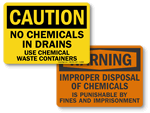
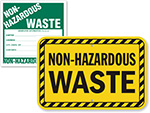
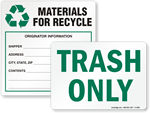
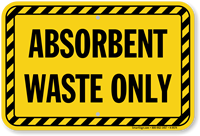
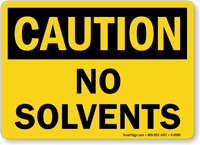
Maintaining a robust regulatory and compliance program with correct signage is a small investment to avoid these massive fines. Using a clear "Hazardous Waste" sign and a sign to prevent mixing waste streams are essential steps in protecting your facility from liability.
Yes, once the solvent waste is being prepared for transport, its container must comply with Department of Transportation (DOT) regulations. This means the container must display the proper shipping name (e.g., "Waste Flammable Liquid, n.o.s."), the UN identification number, and all required hazard class placards.
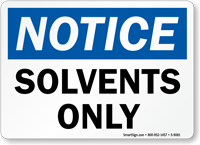
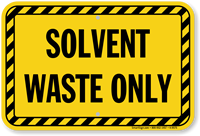
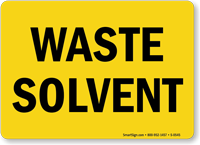
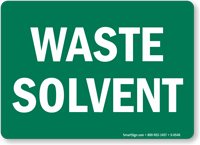
This is separate from on-site storage labeling. In the facility, you would use a "Waste Solvent Only" sign at the collection point. For transport, you must use hazmat placards, such as a "Waste Solvent" placard or a Class 3 Flammable Liquid placard, to be fully compliant for shipping.
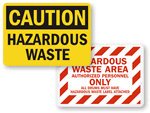
Secondary containment areas for hazardous waste, which are designed to hold 110% of the largest container's volume per EPA's SPCC rule, must be clearly identified. Signage is critical for communicating the hazard and preventing spills. The signs should clearly state the substance being stored (e.g., "Hazardous Waste") to ensure proper handling and emergency response.
Proper signage for chemical storage areas is key. This includes marking the containment zone itself with a "Hazardous Waste Storage Area" sign and ensuring a "Spill Kit" sign is located nearby so that any spill can be managed quickly and safely.
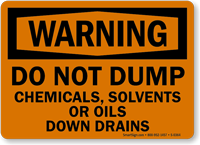
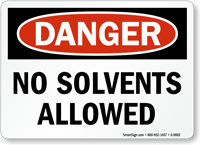
Identify your waste solvents, such as MEK, toluene, naptha, paint thinner and even paint. Dumping these solvents (even water-soluble solvents) into the waste water system is fraught with problems (fires in traps, damage to pipes and environmental hazards).
Call our sales team at (800) 952-1457 and get your quote in minutes!
Mon - Fri 8:00am to 7:00pm EST