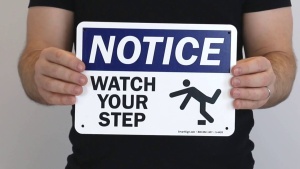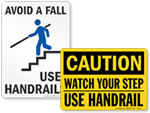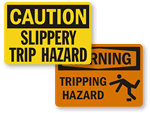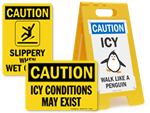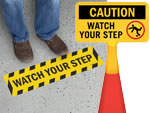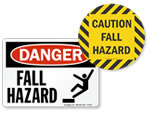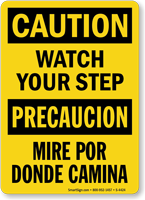
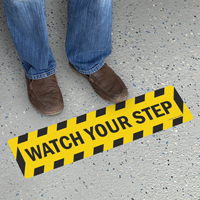
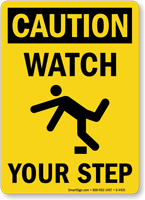
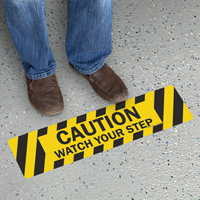
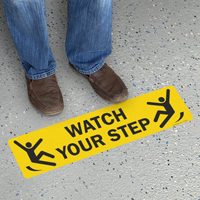
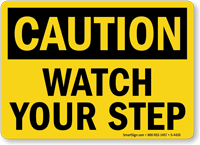
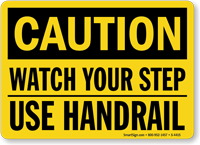
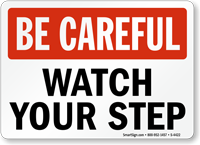
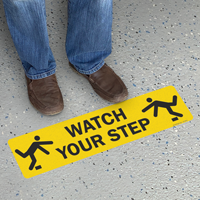
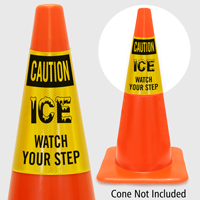
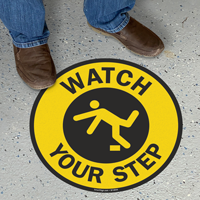
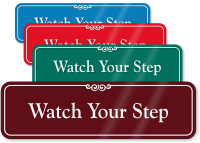
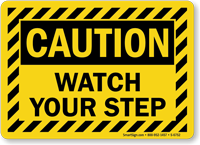
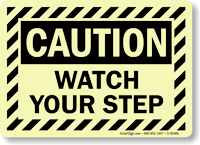
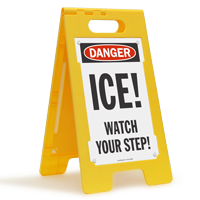
You should install "watch your step" signs at any location with an abrupt or unexpected change in elevation. OSHA's regulations for walking-working surfaces require employers to protect against these hazards.
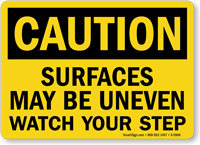
For permanent hazards, a durable floor sign provides a constant reminder. For areas with uneven pavement, a "Surfaces May Be Uneven" sign clearly identifies the specific trip hazard, and a trip hazard sign reinforces the message.
OSHA requires employers to use signs to communicate hazards on walking-working surfaces, as detailed in standard 1910.22. This includes clearly marking passageways, warning of floor openings or holes, and identifying changes in elevation. The goal is to use signage to alert employees to any potential slip, trip, or fall hazard before they encounter it.
Using compliant floor safety signs is a fundamental part of a safe workplace. This can include a danger sign for an open pit or a "Keep Aisles Clear" floor sign to maintain safe walkways. For more information, you can review this guide on how to use floor safety signs effectively.
Step warning signs are a key part of limiting premises liability by legally establishing "notice" of a hazard. In a liability case, a court will assess if the property owner took reasonable steps to warn visitors of a known hazard. A clearly posted sign demonstrates that the owner acted responsibly to prevent an accident.
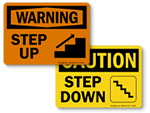
These slip and trip warning signs create a record of this warning. By placing a "Watch Your Step" sign or a specific "Step Down" sign near an elevation change, you shift the responsibility to the person who ignores the warning. You can learn more in this overview of slip, trip, and fall hazards.
The type of sign you use depends entirely on the nature of the hazard. Unchangeable, built-in hazards like ramps, single steps, or permanent thresholds require permanent signs (e.g., metal, plastic, or durable floor decals) to provide a constant warning, as outlined in OSHA's signage standards.
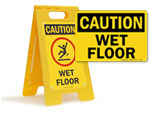
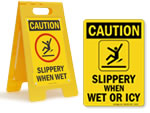
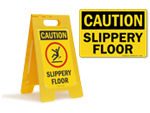
Transient or temporary hazards, such as a fresh spill, recent mopping, or active construction, require temporary signs. This includes portable stand-up floor signs or cones. For example, a permanent floor sign is ideal for a known uneven step, while a wet floor cone sign is used temporarily after cleaning.
The most effective colors for step warning signs are those specified by ANSI and referenced by OSHA for hazard communication. For a "CAUTION" sign, which indicates a potential hazard that could result in minor or moderate injury, the standard is a yellow background with black text and symbols. This color combination offers the highest visibility and is instantly recognized as a caution message.
According to OSHA 1910.145(d), yellow and black should be used for caution. You can learn more about these ANSI safety sign standards. This high-contrast design is used on all effective ANSI caution signs, including traditional wall signs and durable watch your step message mats placed at entrances.
Prevent costly and painful slip, trip, and fall accidents with watch your step signs that alert workers, visitors, and customers to changes in floor level, uneven surfaces, and other underfoot hazards before an injury occurs. Falls are consistently ranked among the leading causes of workplace injuries and workers compensation claims across virtually every industry, making proactive hazard communication at step and level change locations an essential part of any comprehensive facility safety program. Our watch your step signs are designed to deliver immediate, clear warnings exactly where they are needed most while meeting all required regulatory standards.
Call our sales team at (800) 952-1457 and get your quote in minutes!
Mon - Fri 8:00am to 7:00pm EST
Best price guarantee. Fast, free shipping.