Hazardous Materials Signs Ensure Employee Safety
What Counts as a Hazardous Material?
A hazardous material is any substance that poses a risk to life, health or property if it is released or used improperly. Federal agencies define hazardous materials in different ways depending on the setting. Under EPA’s hazardous waste rules, for example, a waste is hazardous if it is specifically listed in the regulations or shows one of four characteristics: ignitability, corrosivity, reactivity or toxicity.

Any accident involving hazardous materials can have dangerous consequences. Yet one of the most practical and cost-effective tools to prevent these accidents is also one of the simplest: hazardous materials signs.
What OSHA Requires: The Hazard Communication Standard?
Reducing the risks of hazardous materials (HazMat) starts with proper labeling and signage during transportation, storage and disposal. OSHA’s Hazard Communication Standard (29 CFR 1910.1200) requires employers to inform employees about the hazardous chemicals they work with through a written hazard communication program, container labels and other forms of warning, safety data sheets, and training. For stationary process containers, employers may use signs or placards in place of individual container labels, as long as it’s clear which containers each sign applies to.
The 2024 HazCom Update
In May 2024, OSHA updated the Hazard Communication Standard to align with the latest revision of the UN’s Globally Harmonized System (GHS). The changes are being phased in: employers must update workplace labels, their written HazCom program and employee training for chemical substances by November 20, 2026, and for mixtures by May 19, 2028. Now is a good time to review your hazardous materials signs and labels.
Why Hazardous Materials Signs Matter?
When hazardous materials are part of the production process, safety precautions are crucial. Hazardous materials signs constantly remind employees of the dangers around them. The broad categories of hazardous materials that need attention include toxic waste, harmful chemicals, biohazards, explosives, radioactive materials and flammable items. Proper hazard labeling isn’t just good sense: it’s a legal requirement for employers. Clear signs also help prevent accidents that can lead to costly injury claims.

Conspicuous hazardous materials signs warn everyone nearby of dangers that aren’t immediately obvious. Reflective or glow-in-the-dark signs stay visible in low light and at night.
Bilingual Hazardous Materials Signs
If some of your employees speak languages other than English, consider posting bilingual hazardous materials signs. OSHA allows employers to add hazard information in other languages, as long as the information is also presented in English, and bilingual signs help make sure every worker understands the warning.

Choosing the Right Hazardous Materials Signs
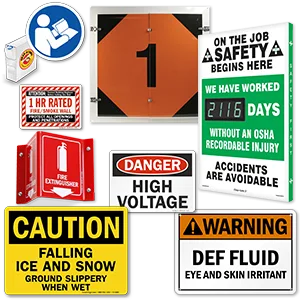
Bright, high-contrast hazard warning signs catch the attention of everyone nearby, even in a hectic work environment. Signal words make the level of risk clear: red “Danger” signs mark hazards that can cause death or serious injury, while yellow “Caution” signs mark hazards that can cause minor or moderate injury.

If your workplace needs specific signs, use our custom sign manager to create your own hazardous materials signs, with no additional setup costs. Our durable materials and self-adhesive vinyl make these signs a lasting value. Don’t forget to browse our wide assortment of regulation-compliant hazardous material placards in numerous shapes and colors.
Like this topic? Check out our related products:
-


Hazardous Materials Labels
-

Hazardous Materials Signs
-

Hazardous Chemicals Signs