Passive Smoke- Punishment to The Not Guilty & How Non-Smoking Signs Can Prevent That
While smoking has its own set of hazards, it’s the passive smokers who too bear the brunt of its ill effects without indulging in the activity.
What Is Passive (Secondhand) Smoke?
Passive smoke, or secondhand smoke, is the smoke nonsmokers breathe in when they’re near someone who is smoking. U.S. health authorities classify it as a known human carcinogen, and according to the CDC, there is no safe level of exposure. Even brief exposure can cause harm.
Health Effects of Secondhand Smoke
In Adults
In adults who don’t smoke, secondhand smoke causes coronary heart disease, stroke and lung cancer. It causes more than 7,300 lung cancer deaths each year among U.S. adults who don’t smoke. Common symptoms of exposure include chest pain, shortness of breath, coughing and mucus.
In Children
Children are especially vulnerable. Among U.S. children 18 months or younger, secondhand smoke is responsible for an estimated 150,000 to 300,000 new cases of bronchitis and pneumonia and 7,500 to 15,000 hospitalizations each year. In babies, it can cause sudden infant death syndrome (SIDS). It can also trigger asthma attacks, and children with asthma who are around secondhand smoke have more frequent and severe attacks.
Is There a Link to Breast Cancer?
Researchers are also studying whether secondhand smoke increases the risk of <a href=”https://www.cancer.org/cancer/types/breast-cancer/risk-and-prevention.html”>breast cancer</a>. Studies in rodents show that chemicals in tobacco smoke reach breast tissue, but the evidence in humans is not yet clear. The U.S. Surgeon General has called the evidence “suggestive but not sufficient.” Even so, the possible link is one more reason to avoid secondhand smoke.
How Warnings and Signs Help?
Given these consequences, the law requires warnings on cigarette packs to raise awareness about the dangers of tobacco, and governments work to reduce its use. Beyond warnings on products, governments, businesses and the public use signs to discourage smoking on their premises. You’ll find them in places like hospitals, gas stations and restaurants.
How No Smoking Signs Protect Nonsmokers?
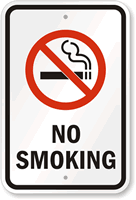
No Smoking Signs discourage tobacco use where people gather. According to the CDC, only 100% smoke-free indoor air fully protects nonsmokers, because ventilation systems can spread secondhand smoke through a building. Clearly marking smoke-free areas, and pointing smokers to designated outdoor areas, keeps nonsmokers away from the hazardous smoke.
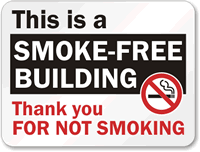
A polite message, like a Thank You for Not Smoking sign, can also serve as a gentle reminder to smokers and may even encourage some to quit altogether.
Like this topic? Check out our related products:
-


No Smoking Signs by State
-

No Smoking Signs
-

No Smoking Beyond this Point Signs